
Rabari Damchiya Dowry Chest From Kutch - Ca 1920
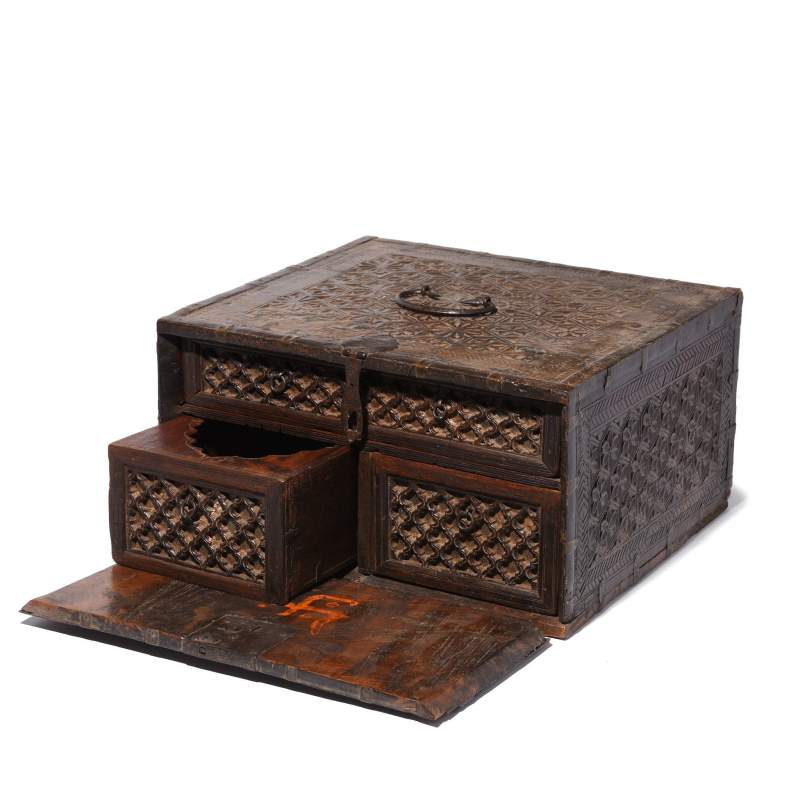
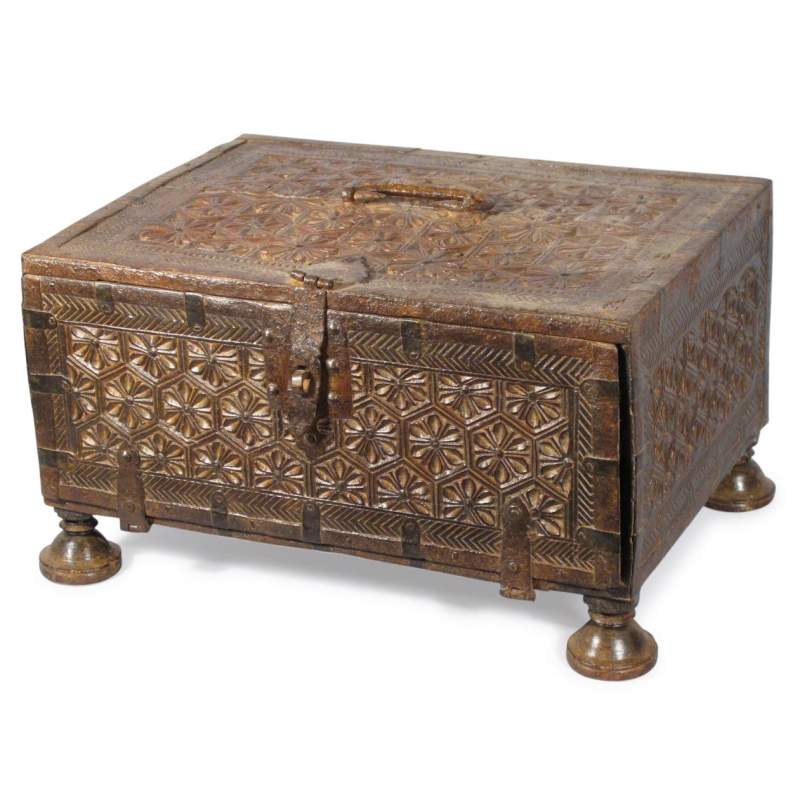
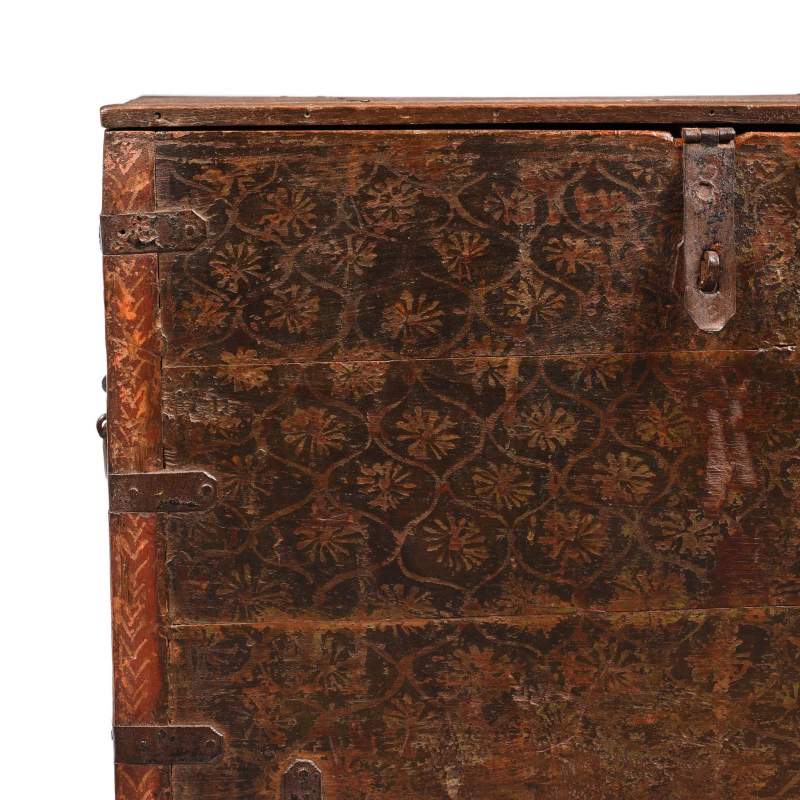
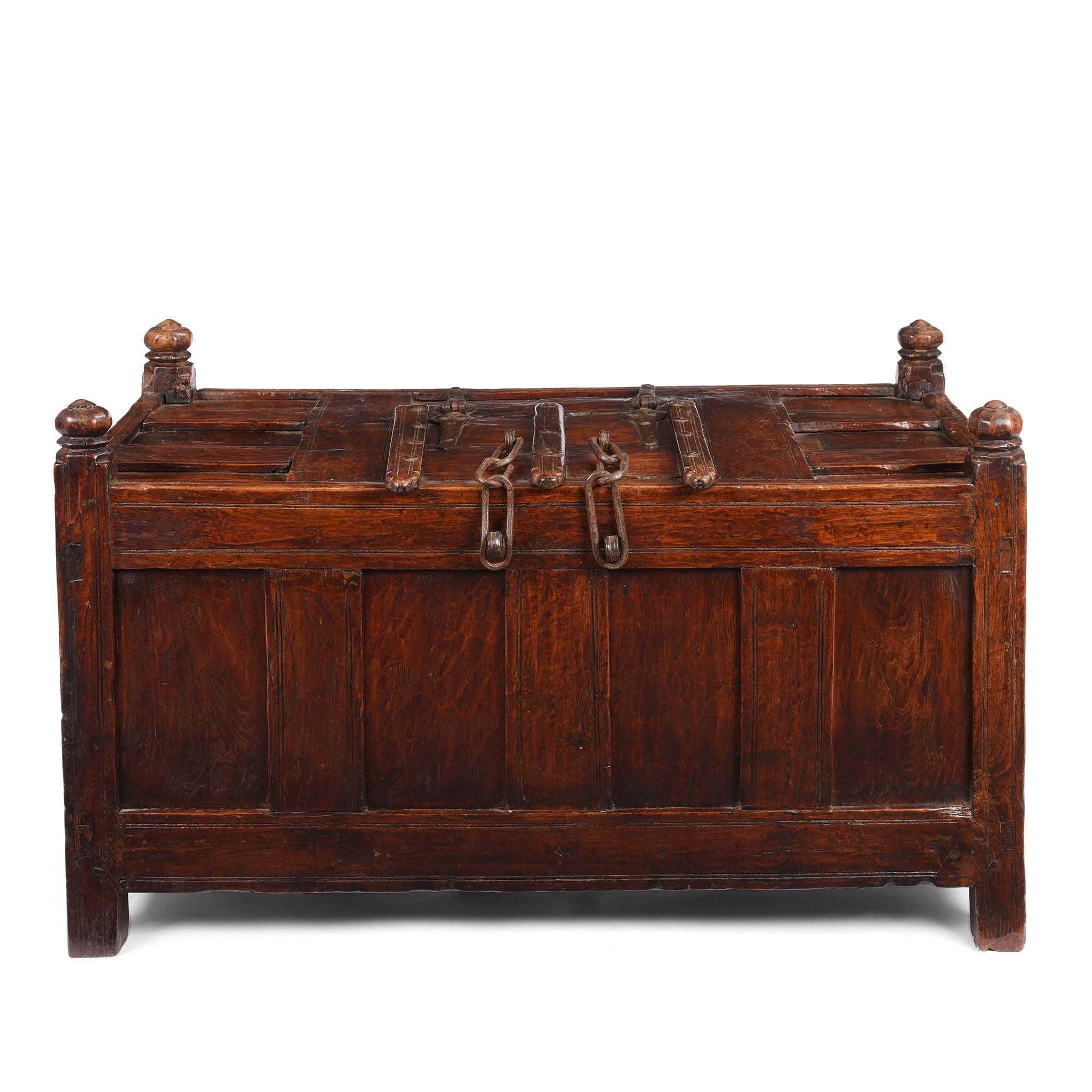
This dramatic Indian bleached teak dowry chest is from the Rabari tribe of Kutch - it's approximately 100 years old. Locally these chests are called 'damchiya'. It is in its original unpolished condition, chip carved and embellished with geometric designs, two opposing peacocks and parrots.
Traditionally the bride€™s family had to offer gifts known as dowry to the bridegroom€™s family if they were to find a good husband for their daughter. Dowry was normally gold jewellery and silk saris but sometimes brass cooking pots and other family treasures were exchanged. In modern times dowry is supposed to have been made an illegal practice, but in reality, it is still practiced and cars and even washing machines have been known to be exchanged.
Dimensions:
115 x 51 x 110 (wxdxh cms)
This dramatic Indian bleached teak dowry chest is from the Rabari tribe of Kutch - it's approximately 100 years old. Locally these chests are called 'damchiya'. It is in its original unpolished condition, chip carved and embellished with geometric designs, two opposing peacocks and parrots.
Traditionally the bride€™s family had to offer gifts known as dowry to the bridegroom€™s family if they were to find a good husband for their daughter. Dowry was normally gold jewellery and silk saris but sometimes brass cooking pots and other family treasures were exchanged. In modern times dowry is supposed to have been made an illegal practice, but in reality, it is still practiced and cars and even washing machines have been known to be exchanged.
Dimensions:
115 x 51 x 110 (wxdxh cms)
Description
This dramatic Indian bleached teak dowry chest is from the Rabari tribe of Kutch - it's approximately 100 years old. Locally these chests are called 'damchiya'. It is in its original unpolished condition, chip carved and embellished with geometric designs, two opposing peacocks and parrots.
Traditionally the bride€™s family had to offer gifts known as dowry to the bridegroom€™s family if they were to find a good husband for their daughter. Dowry was normally gold jewellery and silk saris but sometimes brass cooking pots and other family treasures were exchanged. In modern times dowry is supposed to have been made an illegal practice, but in reality, it is still practiced and cars and even washing machines have been known to be exchanged.
Dimensions:
115 x 51 x 110 (wxdxh cms)