
Painted Window Shutter From Nagaur - 19thC
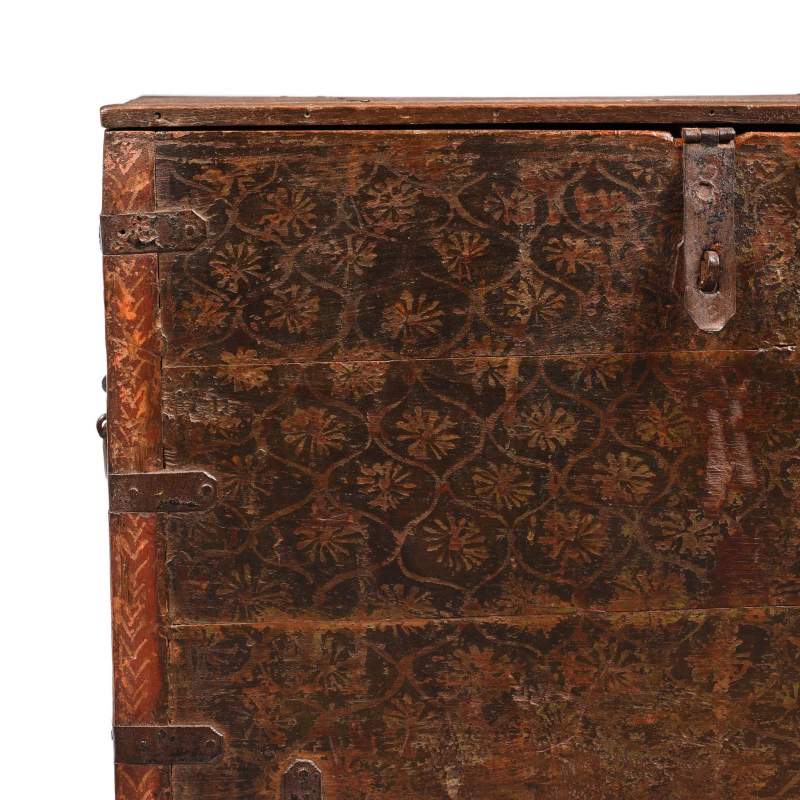
This unusual window shutter is from Nagaur in Rajasthan and dates to the 19th century. This style of window is usually found only in Bikaner, a region further north. It would have been plastered into the wall to form a built-in cupboard for keeping statues of gods safe or for storage.
Painted across this window is the iconic seigaiha wave motif which first appeared in ancient China to indicate waves on a map. It has become prominent in Japanese culture and became a symbol of good luck. It was later widely used in the art deco period. There are also nods to this design in Mughal art suggesting a strong Mughal influence given the desert town of Nagaur is both far from the sea and far from the influences of China & Japan.
Supplied with hangers on the back.
From India
42 x 15 x 45 (wxdxh cms)
UK Delivery Charge - except Highlands & Islands £15
More delivery options available at checkout
This unusual window shutter is from Nagaur in Rajasthan and dates to the 19th century. This style of window is usually found only in Bikaner, a region further north. It would have been plastered into the wall to form a built-in cupboard for keeping statues of gods safe or for storage.
Painted across this window is the iconic seigaiha wave motif which first appeared in ancient China to indicate waves on a map. It has become prominent in Japanese culture and became a symbol of good luck. It was later widely used in the art deco period. There are also nods to this design in Mughal art suggesting a strong Mughal influence given the desert town of Nagaur is both far from the sea and far from the influences of China & Japan.
Supplied with hangers on the back.
From India
42 x 15 x 45 (wxdxh cms)
UK Delivery Charge - except Highlands & Islands £15
More delivery options available at checkout
Original: $1,227.30
-65%$1,227.30
$429.55Description
This unusual window shutter is from Nagaur in Rajasthan and dates to the 19th century. This style of window is usually found only in Bikaner, a region further north. It would have been plastered into the wall to form a built-in cupboard for keeping statues of gods safe or for storage.
Painted across this window is the iconic seigaiha wave motif which first appeared in ancient China to indicate waves on a map. It has become prominent in Japanese culture and became a symbol of good luck. It was later widely used in the art deco period. There are also nods to this design in Mughal art suggesting a strong Mughal influence given the desert town of Nagaur is both far from the sea and far from the influences of China & Japan.
Supplied with hangers on the back.
From India
42 x 15 x 45 (wxdxh cms)
UK Delivery Charge - except Highlands & Islands £15
More delivery options available at checkout